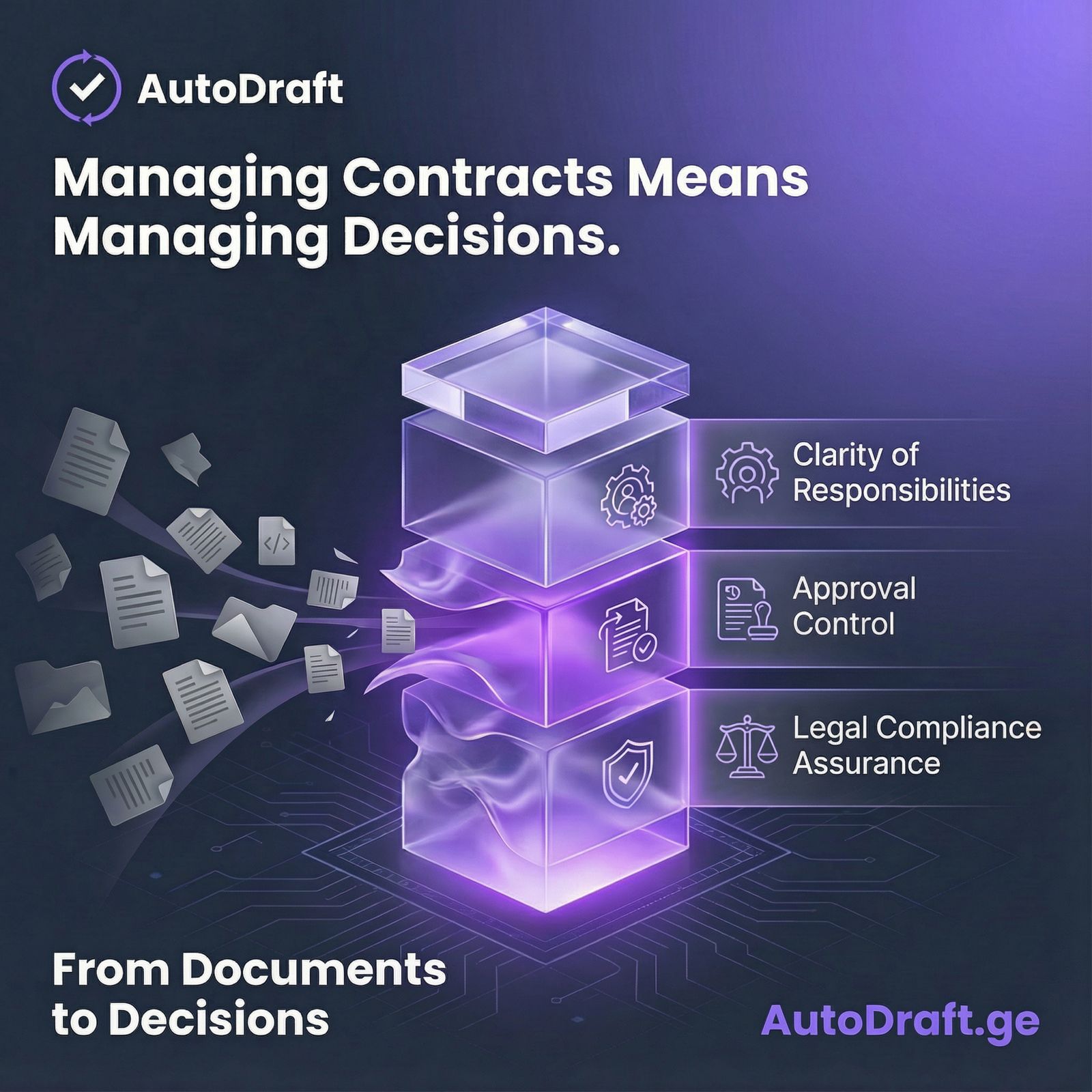
Contract Lifecycle Management (CLM) is the process of managing contracts from creation to expiration in a structured and systematic way. It covers every stage of a contract's life, ensuring visibility, control, and efficiency throughout.
In many organisations, contracts are still managed manually — through emails, shared folders, and spreadsheets. This often leads to delays, missed obligations, and uncertainty during decision-making. CLM helps eliminate these issues by centralising and organising the entire contract process.
Key Stages of CLM
A typical contract lifecycle includes:
- Drafting and creation — preparing contracts using templates and standardised clauses
- Review and approval — coordinating internal reviews and approvals efficiently
- Negotiation and signing — finalising terms and executing the contract
- Storage and management — securely storing contracts and tracking key terms
- Monitoring and renewal — managing deadlines, obligations, and renewals
By managing these stages in one system, companies gain better control over their contractual commitments.
Why CLM Matters for Businesses
CLM is not just a legal tool — it is a business enabler. Effective contract lifecycle management:
- speeds up decision-making
- reduces legal and operational risk
- improves collaboration between legal, finance, and business teams
- increases transparency and accountability
When contract information is easily accessible, managers can make informed decisions without unnecessary delays.
CLM as a Strategic Advantage
Modern CLM solutions transform contracts from static documents into active business tools. They help organisations move faster, stay compliant, and align contracts with business strategy.